
Here is a comprehensive overview of the Top Animal Feed Companies in Kenya for 2025, based on the latest market analysis and industry developments.
The Kenyan animal feed market is a dynamic and rapidly growing sector, crucial to supporting the country’s robust livestock industry. It is expected to grow at a compound annual growth rate (CAGR) of 5.8% from 2025 to 2031 . However, the market is also characterized by a high degree of concentration, with the largest four suppliers accounting for over 50% of commercial feed sales nationally. This concentration raises concerns about competition and pricing .
The following table provides a snapshot of the key players, from established giants to innovative new entrants.
Key Animal Feed Manufacturers in Kenya (2025)
| Company Name | Established | Headquarters | Key Brands/Notes |
|---|---|---|---|
| Unga Holdings Limited | 1908 | Nairobi | Feedmix; One of the oldest and most well-known companies with a strong distribution network. |
| Bidco Land O’Lakes | 2017 | Nairobi | OptiMix; A joint venture with US-based Land O’Lakes Inc., known for high nutritional value. |
| Pwani Feeds Limited | 1983 | Mombasa | Pwani Feeds; Offers a wide range for poultry, cattle, pigs, and fish. |
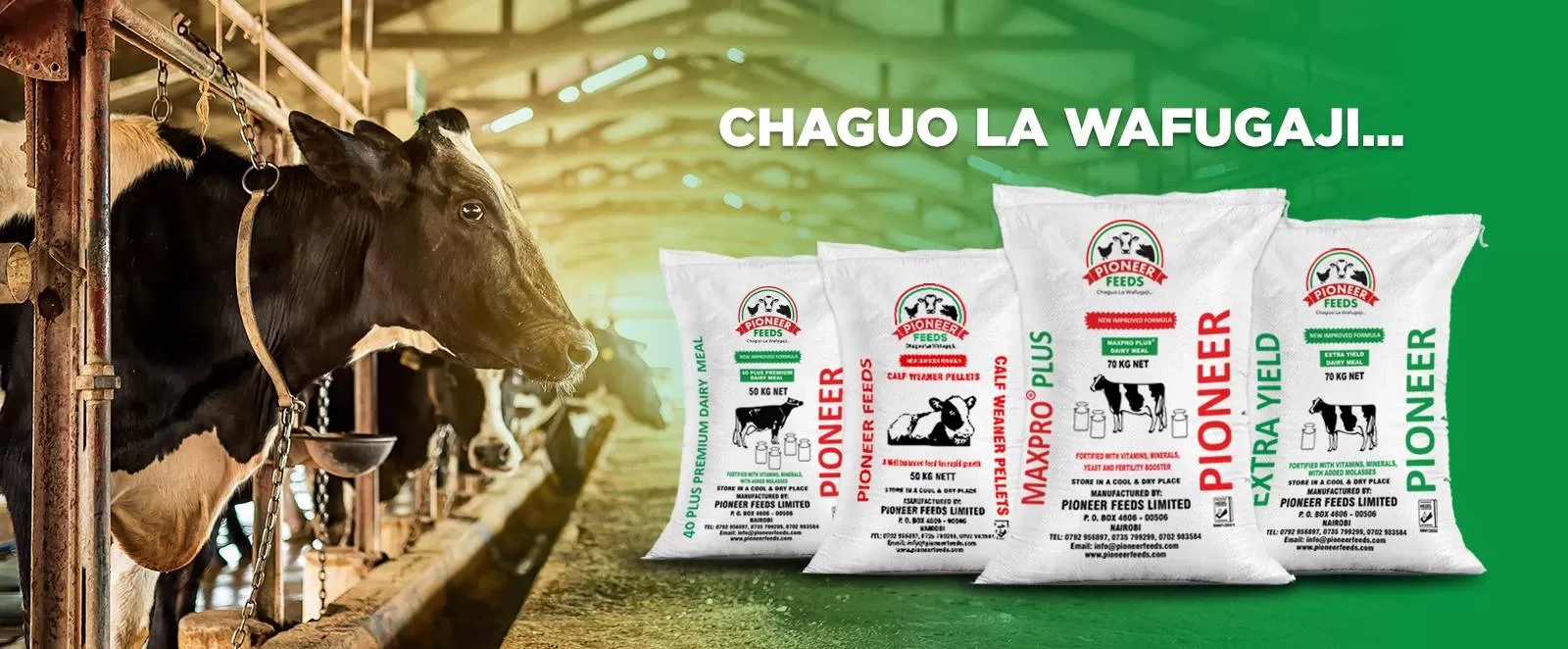
| Pioneer Feeds Limited | 1993 | Nakuru | Pioneer; One of the fastest-growing companies, producing feed for poultry, cattle, horses, and pets. |
| Equatorial Nut Processors (ENP) | 1992 | Nairobi | Specializes in high-quality and affordable feeds for various animals. |
| Gold Crown Feeds Limited | 2015 | Thika | Gold Crown; Known for high protein content and nutritional value. |
| Mombasa Maize Millers (MMM) | 1978 | Mombasa | Soko brand; One of the largest producers, offering affordable feeds. |
| Ruiru Feeds Limited | 1974 | Ruiru | Ruiru Feeds; A pioneer known for consistent nutritional value. |
| Wonder Feeds Limited | 2005 | Thika | Wonder Feeds; A leading manufacturer with a strong commitment to quality control. |
| Hi-Tech Feeds International Ltd | 2007 | Nairobi | Hi-Tech; Known for nutritional value and cost-effectiveness. |
| De Heus | – | (Athi River) | Dutch multinational investing in a new $23M plant in Athi River, targeting a 15% market share by 2027. |
| LIONPRO | – | – | Drives innovation with alternative protein sources like Meat and Bone Meal (MBM) to reduce import dependency. |
| Sigma Feeds Limited | – | – | Operates state-of-the-art production plants for mash, pelleted, and extruded feed. |
📈 Market Context and Challenges
The industry faces significant challenges that impact both manufacturers and farmers:
-
Market Concentration: The market is highly concentrated, with the top four suppliers dominating approximately 75% of the poultry and dairy feed segments. This oligopolistic structure can lead to anti-competitive practices like coordinated pricing and inflated costs for farmers .
-
High Input Costs: Manufacturers are heavily dependent on imported raw materials (e.g., soybean meal, sunflower cake), with key inputs controlled by a few regional processors in East and Southern Africa. This dependency, coupled with high government taxes and county-level levies, fragments the market and drives up final feed prices.
-
Push for Sustainability & Innovation: There is a concerted effort, supported by international collaborations (e.g., with the Netherlands), to foster a more sustainable and resilient feed sector. This includes initiatives to commercialize research, harmonize tax policies, and utilize local ingredients more effectively to reduce costs and import dependency.
💡 Strategic Developments to Watch in 2025
-
Entry of Multinationals: The entry of global players like De Heus is a major development. Their investment of KSh 3 billion (US$23 million) in a state-of-the-art plant in Athi River is set to increase competition and raise quality standards. The company aims to capture a 15% market share by 2027, particularly in the poultry segment, and plans to source raw materials locally to stabilize costs.
-
Innovation in Ingredients: Companies like LIONPRO are addressing the critical issue of expensive imported protein by promoting the use of locally sourced Meat and Bone Meal (MBM). This provides a cost-effective, nutritious alternative and enhances value chain resilience.
-
Collaborative Roadmaps: Multi-stakeholder initiatives, such as those facilitated by the Kenya-Netherlands collaboration, are working to create a “future-proof” feed sector. The focus is on actionable strategies to reduce feed costs, improve regulatory harmonization, and bridge the gap between academia and industry to commercialize innovations.
💎 Conclusion
The top animal feed companies in Kenya for 2025 range from long-standing local giants to innovative new entrants and ambitious multinationals. While the market is growing, it is undergoing a significant transformation driven by competition concerns, the need for cost reduction, and a strong push toward sustainability and innovation.
For a farmer or investor, this means:
-
More choices due to increased competition.
-
Potential for better quality and more innovative feed formulations.
-
An industry focused on long-term sustainability through local sourcing and collaboration.
For the most detailed and updated market analysis, you can refer to reports by firms like 6Wresearch