
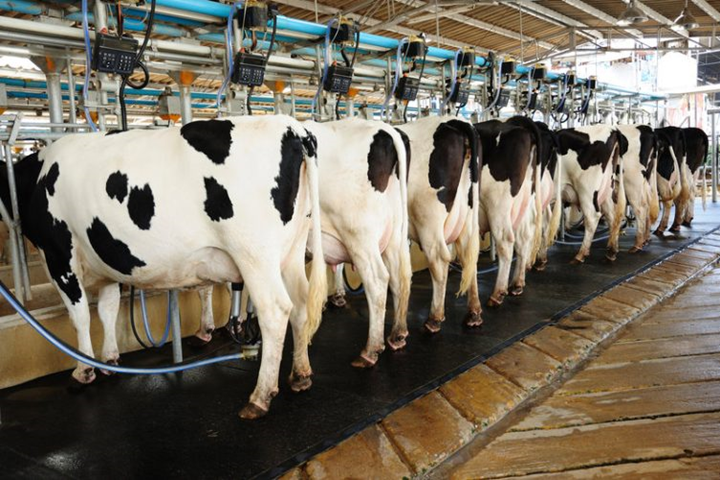
Commercial dairy farming in Kenya plays a vital role in the economy, contributing 4% to GDP and supplying milk to both local and export markets. While it offers significant profitability potential, it also faces structural and operational challenges. Below is a detailed analysis of its benefits and limitations.
Advantages of Commercial Dairy Farming
High Milk Production & Economies of Scale
- Commercial farms produce 15–40 liters per cow daily, far exceeding smallholder yields .
- Bulk production reduces cost-per-liter, improving profitability through efficient feed, labor, and equipment use .
Access to Premium Markets
- Large volumes enable direct contracts with processors (Brookside, KCC), supermarkets, and exporters .
- Some farms engage in value addition (yogurt, cheese, UHT milk), fetching higher margins .
Advanced Technology Adoption
- Use of automated milking systems, AI, and precision feeding boosts efficiency .
- Solar-powered cooling tanks reduce spoilage, ensuring compliance with quality standards .
Stable Income & Employment Creation
- Generates year-round revenue compared to seasonal crop farming .
- Creates jobs for veterinarians, farm managers, and milk processors .
Government & NGO Support
- Eligible for subsidies, low-interest loans, and training programs (e.g., Kenya Climate-Smart Agriculture Project) .
- Partnerships with research institutes (ILRI, KALRO) improve breed and feed innovations .
Challenges of Commercial Dairy Farming
High Initial Investment & Operating Costs
- Startup costs for land, high-yield breeds (Friesians), and machinery exceed KSh 10M+ .
- Feed accounts for 60–70% of expenses, with prices volatile due to global grain shortages .
Disease Management Complexities
- Large herds are prone to mastitis, lumpy skin disease, and tick-borne illnesses, requiring costly vaccines/acaricides .
- Milk rejection due to antibiotic residues harms contracts with processors.
Climate Vulnerability
- Droughts reduce fodder and water availability, forcing reliance on expensive silage.
- Heat stress lowers Friesian yields by 10–25% in arid regions .
Market & Logistics Barriers
- Price fluctuations from informal sector competition squeeze profits .
- Poor rural roads and power outages disrupt cold-chain logistics, increasing spoilage .
Policy & Regulatory Hurdles
- Inconsistent milk pricing policies and taxation on inputs raise operational costs .
- Land ownership disputes in high-potential areas (e.g., Rift Valley) delay expansion .
Key Strategies for Success
Feed Optimization
- Grow drought-tolerant fodder (Brachiaria, Lucerne) and adopt silage preservation .
Health & Breeding Improvements
- Implement routine vaccination and use sexed semen/AI for higher-yielding calves .
Market Diversification
- Partner with cooperatives for collective bargaining or invest in on-farm processing .
Renewable Energy Integration
Install biogas digesters (from manure) and solar chillers to cut energy costs .
Policy Advocacy
Lobby for standardized milk pricing and subsidized feed/vet services.
Conclusion
Commercial dairy farming in Kenya is profitable but capital-intensive, requiring climate-smart practices, tech adoption, and strong market linkages. While challenges like feed costs and diseases persist, strategic investments can unlock long-term growth.
🚜 Need expert advice?
📍 Uwezo Farm, Nyandarua
📞 0717 548 103 | ✉ info@uwezofarm.co.ke
For breed selection, feed management, and market access strategies, contact us today! 🐄💡