
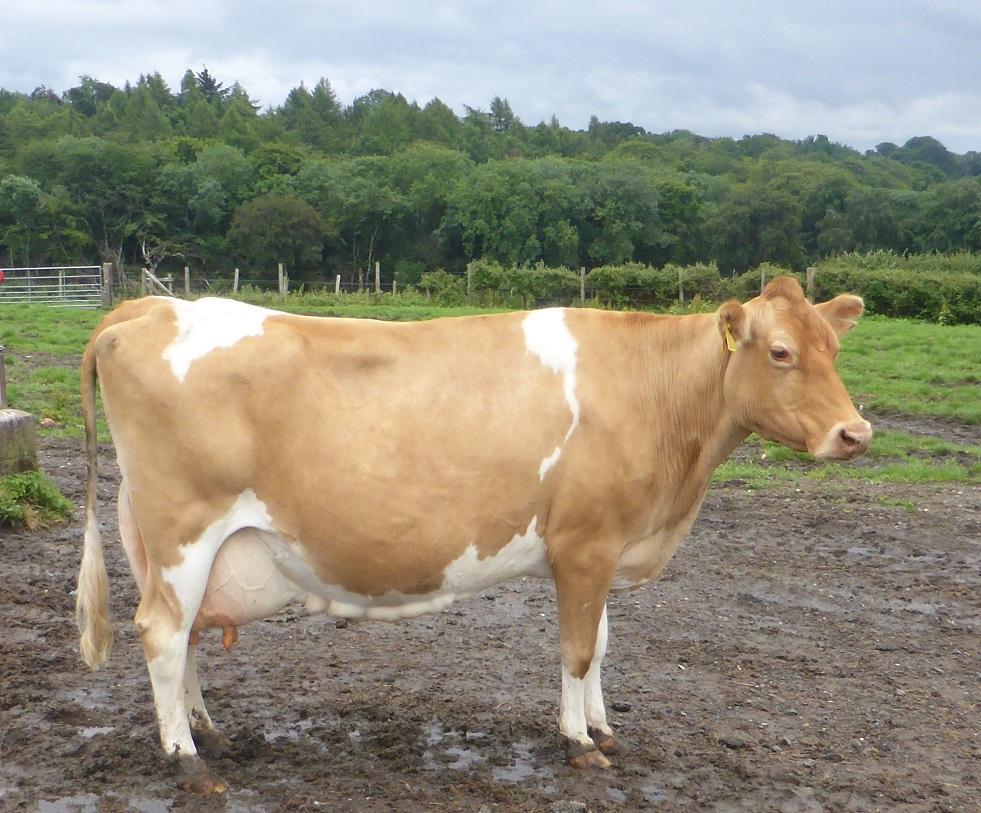
Guernsey cows are a unique dairy breed known for their golden-colored milk and efficient feed conversion. While not as common as Friesians or Jerseys in Kenya, they offer distinct benefits for farmers targeting niche dairy markets. Below is a detailed analysis of their strengths and limitations in the Kenyan context.
Advantages of Guernsey Cows
High-Quality, Nutrient-Rich Milk
- Produces golden-colored milk due to high beta-carotene content (30% more vitamin A than average milk) .
- Butterfat (4.68%) and protein (3.57%) levels exceed those of Friesians, making it ideal for cheese, butter, and premium dairy products.
- 96% of Guernseys produce A2 beta-casein milk, which some studies suggest is easier to digest.
Feed Efficiency & Lower Maintenance Costs
- Consumes 20–30% less feed than larger breeds like Friesians while maintaining good milk output .
- Requires 13–17 kg of dry matter daily, making them economical for small-scale farmers .
Heat Tolerance & Adaptability
- Performs well in warmer climates, including coastal and semi-arid regions where Friesians struggle .
- Their fawn-and-white coat helps reflect heat, reducing stress-related milk drops .
Ease of Calving & Docile Temperament
- Lowest calving difficulty among major dairy breeds, reducing vet costs .
- Gentle and easy to handle, making them suitable for smallholder farms .
Longevity & Early Maturity
- Live longer than Friesians, with productive lifespans of 8–10 lactations.
- Heifers can calve at 22 months, offering quicker returns on investment .
Challenges of Guernsey Cows
Lower Milk Volume
- Average 15–25 liters/day, less than Friesians (40–50L), limiting bulk milk sales .
Limited Availability in Kenya
- Fewer breeding stock and AI options compared to Friesians or Jerseys .
Market Niche Dependency
- Requires targeted buyers (e.g., cheese/butter processors) to capitalize on premium milk pricing .
Cold Sensitivity in Calves
- Calves are prone to hypothermia in highland areas like Nyandarua .
Lower Beef Value for Bull Calves
Unlike Friesian crosses, Guernsey bulls have minimal beef value, reducing resale options .
Best Regions for Guernseys in Kenya
✅ Ideal Areas:
-
Coastal lowlands (Mombasa, Kilifi)
-
Central Kenya (Kiambu, Murang’a)
-
Semi-arid zones (Machakos, Kitui).
❌ Less Suitable:
-
Very cold highlands (Nyandarua, Kericho) unless proper calf housing is provided.
Conclusion: Is the Guernsey Right for You?
Guernseys are best suited for:
-
Farmers targeting value-added dairy products (cheese, yogurt, A2 milk).
-
Small-scale operations with limited feed resources.
-
Warmer regions where Friesians underperform.
Not ideal for:
-
Farmers supplying bulk milk processors.
-
Cold highlands without calf-warming systems.
🚜 Interested in Guernsey cows?
📍 Contact Uwezo Farm, Nyandarua
📞 0717 548 103 | ✉ info@uwezofarm.co.ke
🌐 www.uwezofarm.co.ke
For breeding stock, feeding guides, and farm visits, reach out today! 🐄